Skip to content
Contact Us
Background image
EXPIREON™

The Legal Data Continuity™ platform

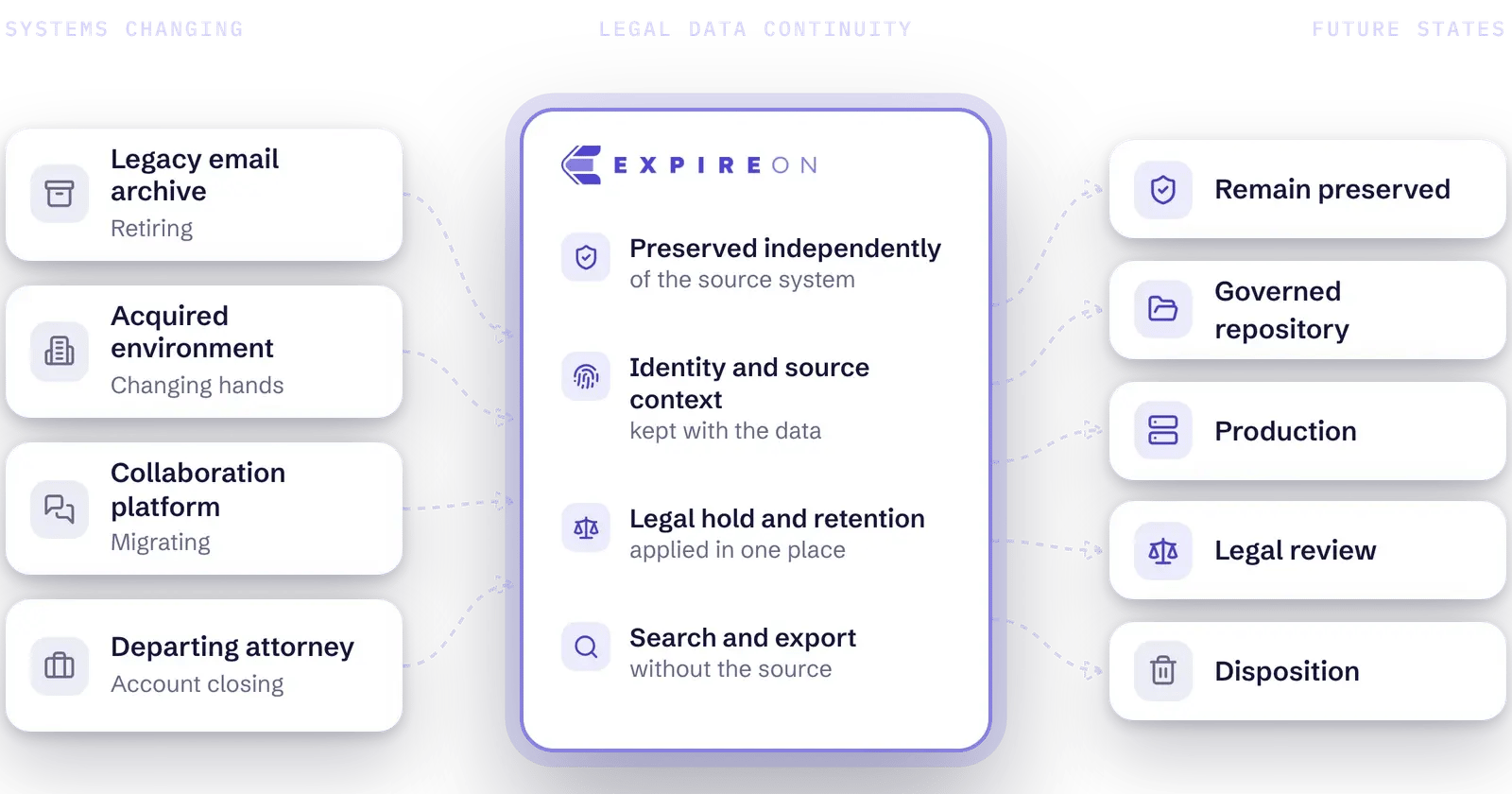
Expireon gives legally significant data a home of its own. Preserve it independently of the systems and accounts that created it, keep the identity and source context that make it usable years later, find and export what a matter needs, and dispose of it when the requirement ends.

eo-product-01-hero-1

Built for obligations that outlive systems

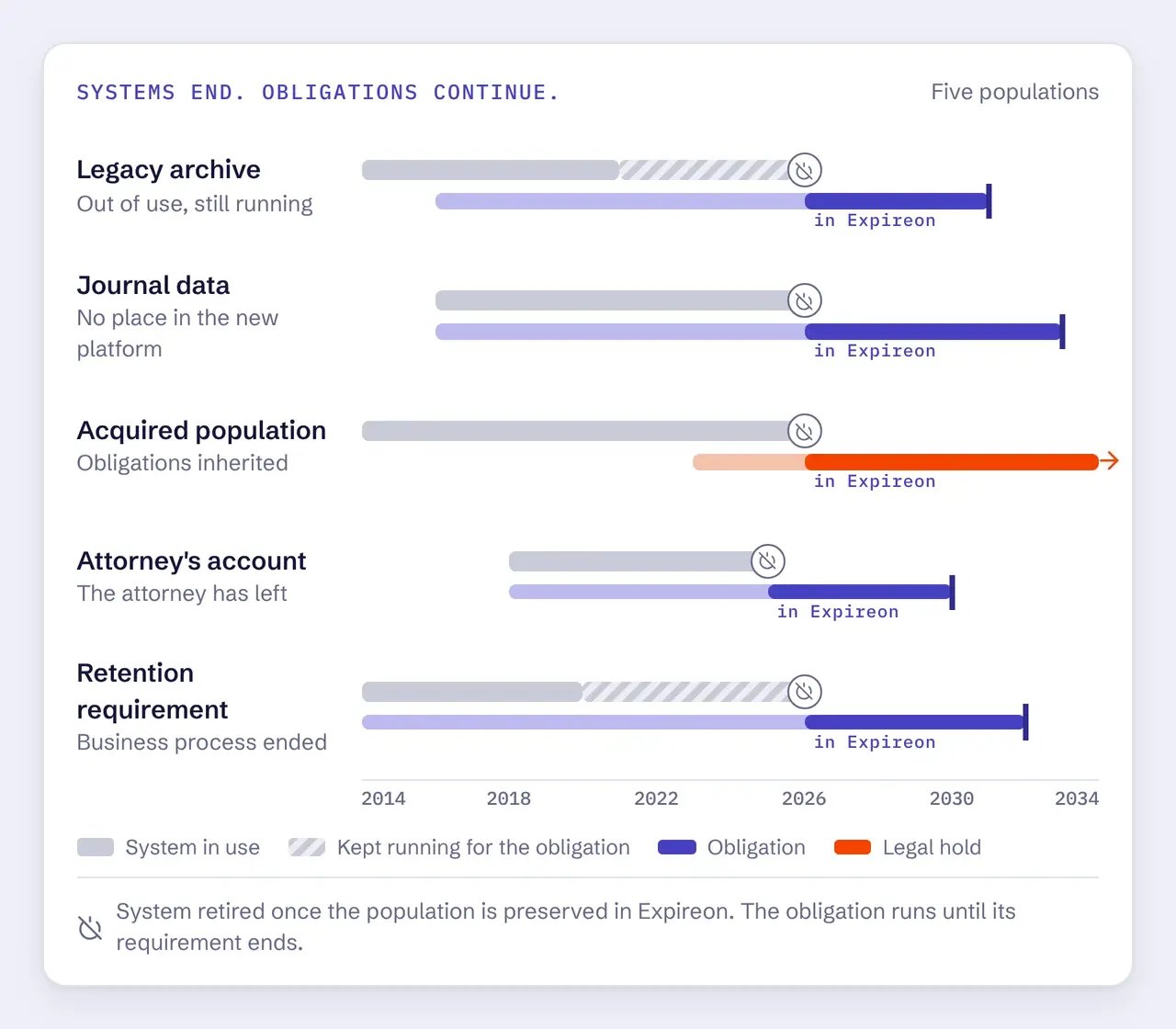
Requirements do not expire on the same schedule as the infrastructure that produced them:

  • A legacy archive that is out of use but cannot be retired
  • Journal data with no place in the new production platform
  • Populations acquired in a transaction, carrying obligations the acquirer inherited
  • An attorney's account after the attorney has gone, holding client and matter data
  • Retention requirements that continue long after the business process that created the data ended
Expireon preserves each population, keeps the identity and source context that make it interpretable years later, and holds it under governance until the requirement ends.
eo-product-02-obligations-outlive-systems

Why Expireon

Legal Data Continuity separates continuing obligations from the environments an organization needs to change or retire. The circumstances vary, but the requirement remains the same: keep information and its obligations intact without keeping the original environment in place.
Retire obsolete systems

Preserve required historical information independently so legacy infrastructure can be decommissioned once its operational use ends.

Complete migrations and transactions

Keep preservation-only populations outside the new production platform when they have no current business purpose there.

Protect historical information

Maintain legally significant data and the context that explains it after accounts, platforms, directories, or organizations change.

Reduce unnecessary production data

Separate the data that must remain governed from the data that belongs in active business systems.

Keep preserved data usable

Search, preview, and export information without restoring the source environment.

Apply an end state

Retain information while the requirement continues and dispose of it when the requirement ends.

How Expireon works

The five stages describe what happens to the data rather than what happens to a project, which is why the same model applies to a retiring archive, an acquired environment, a platform migration, and a departing attorney's account.

Protect information through change

Protect information before a migration, decommission, acquisition, or departure changes or removes access to it. 

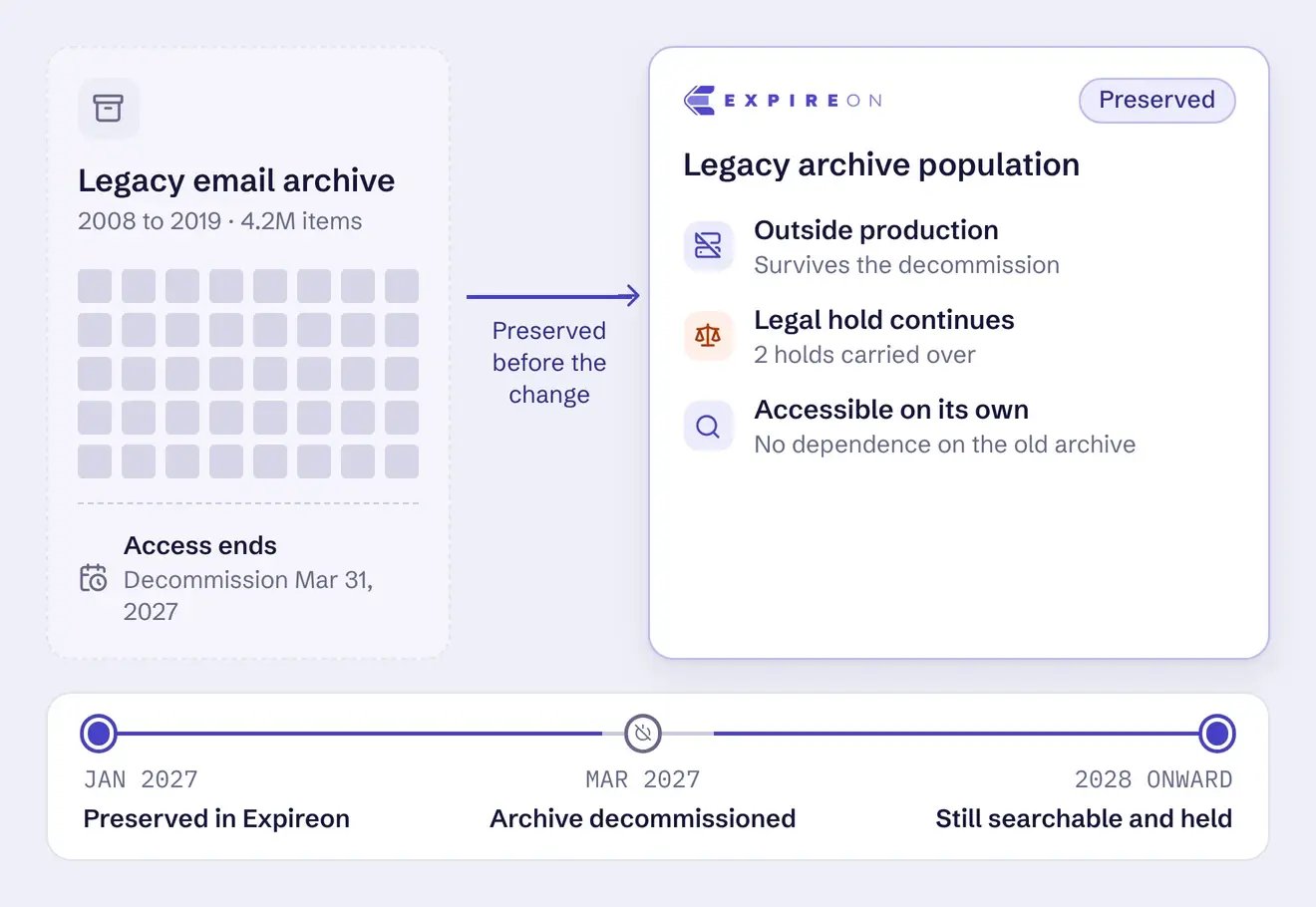
  • Preservation outside production | Expireon supports preservation outside production so information can survive a transition without requiring the original production system to remain available.
  • Legal hold continuity | Legal hold continuity can remain part of the workflow when information moves out of a legacy or changing environment.
  • Independent accessibility | Future legal access should not depend on the obsolete source application.
eo-product-03-tab-preserve

Break Legal Data Lock-In™

Legal Data Lock-In ends when legally significant information no longer depends on a system, account, or platform the organization needs to change. That requires independent preservation, useful context, controlled access, future usability, portability, and governed disposition.

Preserve required information

Protect information independently when its continuing requirement outlives the source system, account, or tenant.

Maintain useful context

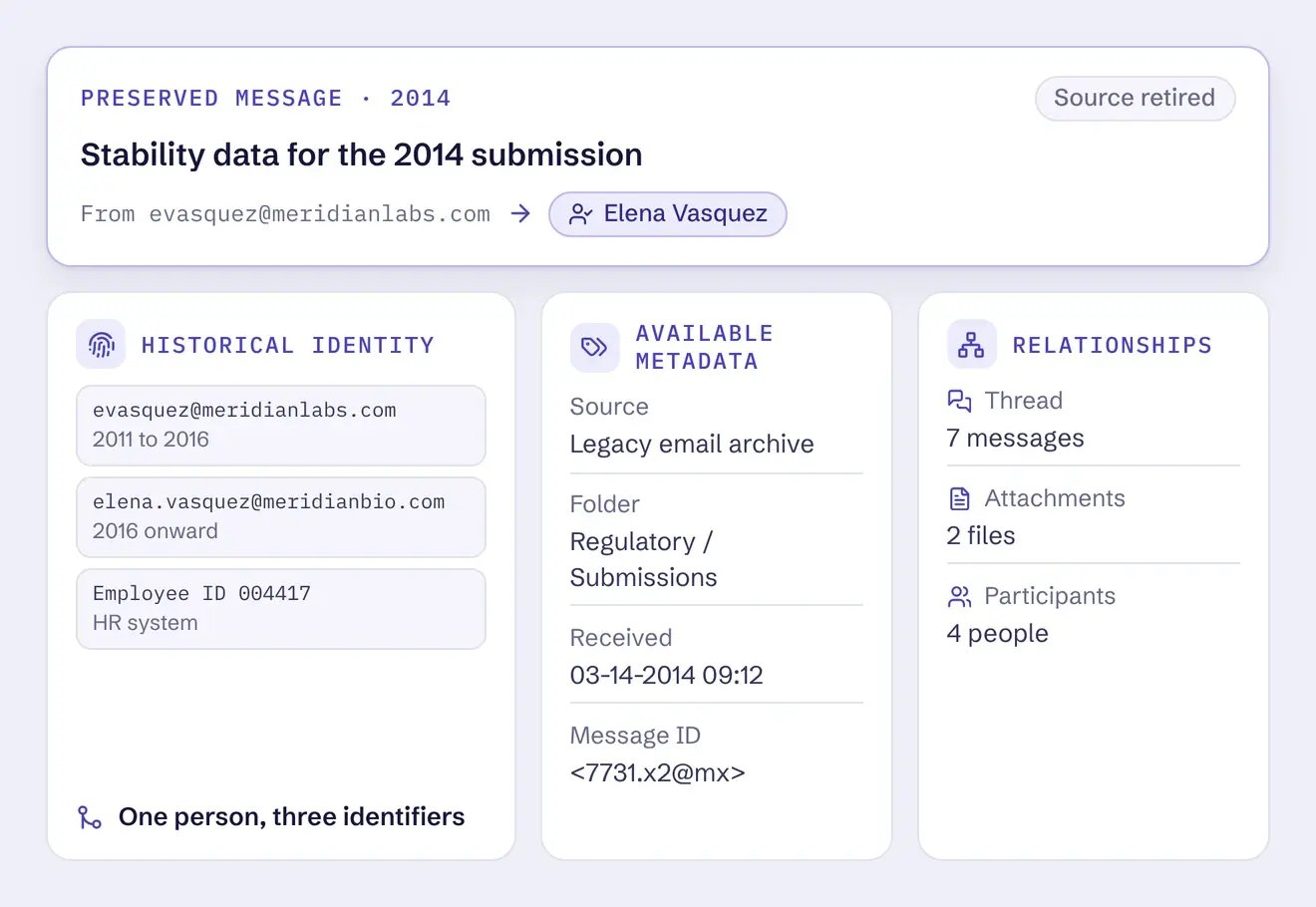
Retain available historical identity, source information, metadata, relationships, provenance, and legal status so the population remains interpretable after the source is gone.

Control access

Give authorized teams access to defined populations without returning preserved information to production.

Support future legal use

Search, preview, and export selected information without restoring the original environment.

Keep an exit path

Keep retained information exportable in a form that future systems and workflows can use.

Support disposition

Apply approved retention and expiration rules, prevent disposition while another requirement remains, and retain the audit history of what was disposed of and why.

Platform capabilities

Expireon™ supports preserved information from ingestion through governed access, retention, export, and disposition. Each capability works against the same governed population, with available context carried forward.

Ingest legacy and transition data

Bring information from supported live and legacy sources into a governed environment while retaining available source metadata and chain-of-custody information.


Preserve data outside its source

Keep information subject to continuing requirements available outside its original environment. When a legal hold managed in CaseFusion® applies, scheduled expiration in Expireon remains suspended.

Maintain useful context

Retain supported associations among people, accounts, aliases, messages, attachments, files, and participants, including available file versions associated with recorded sharing events.


Search, access, and classify information

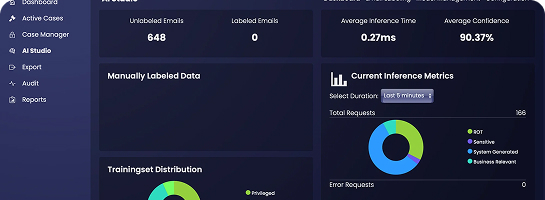
Search and filter by metadata, legal status, classification, and full text where available. Preview supported content, export selected information, and use AI Studio to classify email with models trained on the organization’s examples.


Apply retention and disposition rules

Apply retention categories to different populations, suspend expiration while a hold or other requirement applies, and move eligible information through an approved disposition process with its audit history retained.


Control storage and portability

Store supported information in native or source-appropriate formats on customer-controlled or approved storage. No egress charge applies to data moving out of Expireon storage; customer-controlled storage remains subject to the organization’s agreement with its storage provider.

eo-product-08-ai-studio
Expireon AI Studio

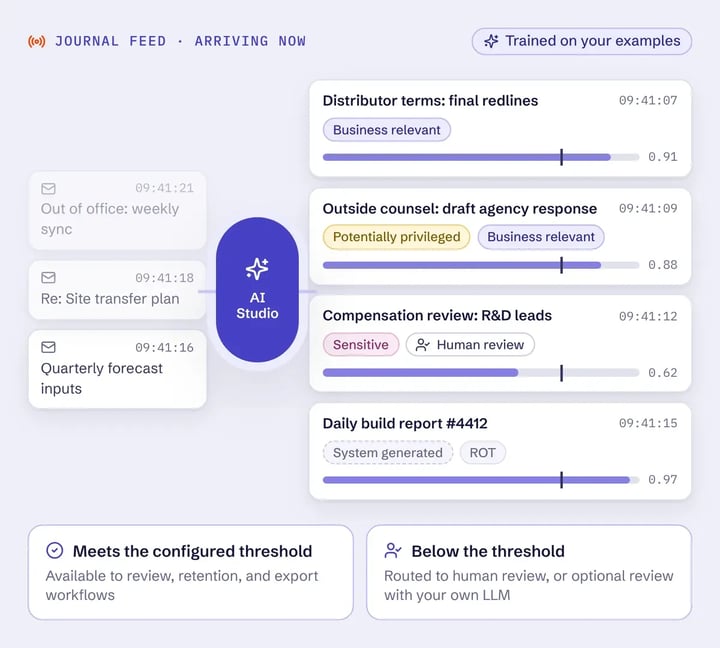
AI Studio uses machine-learning-assisted classification to help organizations understand email in Expireon. Each model is trained on the organization’s own examples and can be applied consistently across live journal feeds, historical email, and preserved email populations.

  • Prioritize email that appears to contain substantive business content in review, preservation, migration, or retention workflows.

  • Surface email that may involve privileged communications so reviewers can prioritize it for legal assessment.

  • Identify content that may warrant additional review, handling, or access controls.

  • Segment redundant, obsolete, or trivial content for triage and further policy review.

  • Separate automated messages from ordinary human business communications.

 

Use classification to focus review effort without giving the model authority over the legal decision.
Explore Expireon AI Studio

How Expireon supports a data transition

An organization is retiring a legacy archive while moving active users and current business data to Microsoft 365. Some historical and journal populations must remain preserved outside production. Expireon™ keeps those populations governed while active data moves forward.

Ingest supported populations

Bring historical and transition data into Expireon with the available metadata from each source.

Preserve outside the source

Keep information subject to continuing requirements independent of the environment that originally held it.

Maintain useful context

Retain available identity, source metadata, and relationships so the population remains understandable over time.

Provide controlled access

Give authorized teams the ability to search and preview retained populations without restoring the source environment.

Classify email with AI Studio

AI-assisted classification helps teams understand email populations. Use classification to focus review effort without giving the model authority over the legal decision.

Move active data to production

Route active or required business data through the appropriate migration path into its next production environment.

Keep preservation-only data outside production

Maintain preservation-only and journal populations in Expireon rather than adding them to production systems.

Export selected information

When a matter, records process, or business requirement calls for information, authorized users can search and export the approved subset.

Complete the lifecycle

Move information to another governed destination when its continuing purpose requires it. When no requirement remains, eligible information proceeds through the approved disposition process.

How Expireon™ relates to CaseFusion®

price-cards-1 Cloudficient__expireon_cropped
The Legal Data Continuity™ platform Expireon
  • Preserves and governs legally significant historical and transition data when systems, organizations, platforms, and people change.
price-cards-2 case-fusion-logo
The Context-Aware eDiscovery platform CaseFusion
  • Supports matter-centered identification, legal hold and preservation, targeted collection, and early case assessment.

Where organizations use Expireon

Expireon supports four common transitions in which required information must remain governed after its original system, organization, platform, or account changes.

A system is being retired Archive retirement

Preserve required information outside the legacy archive so the application can be decommissioned while future access remains available.

An organization is changing M&A and divestiture data preservation

Protect information with continuing requirements while acquired environments are integrated or divested environments are separated.

A platform is changing Collaboration platform migration

Preserve collaboration history that must survive the migration without adding preservation-only data to the new production platform.

A person is leaving Attorney transition & client data governance

Preserve departing-attorney data while the firm identifies and transfers client or matter information that should remain governed.

Expireon FAQs

What is Expireon?

Expireon is Cloudficient's Legal Data Continuity platform for preserving, understanding, governing, and transitioning legally significant historical and transition data when systems, organizations, platforms, or people change. 

What is Expireon used for?

Retiring obsolete systems, completing migrations and transactions, protecting historical information, reducing unnecessary production data, keeping preserved data usable, and applying an end state to information the organization no longer needs to keep. 

Is Expireon an archive?

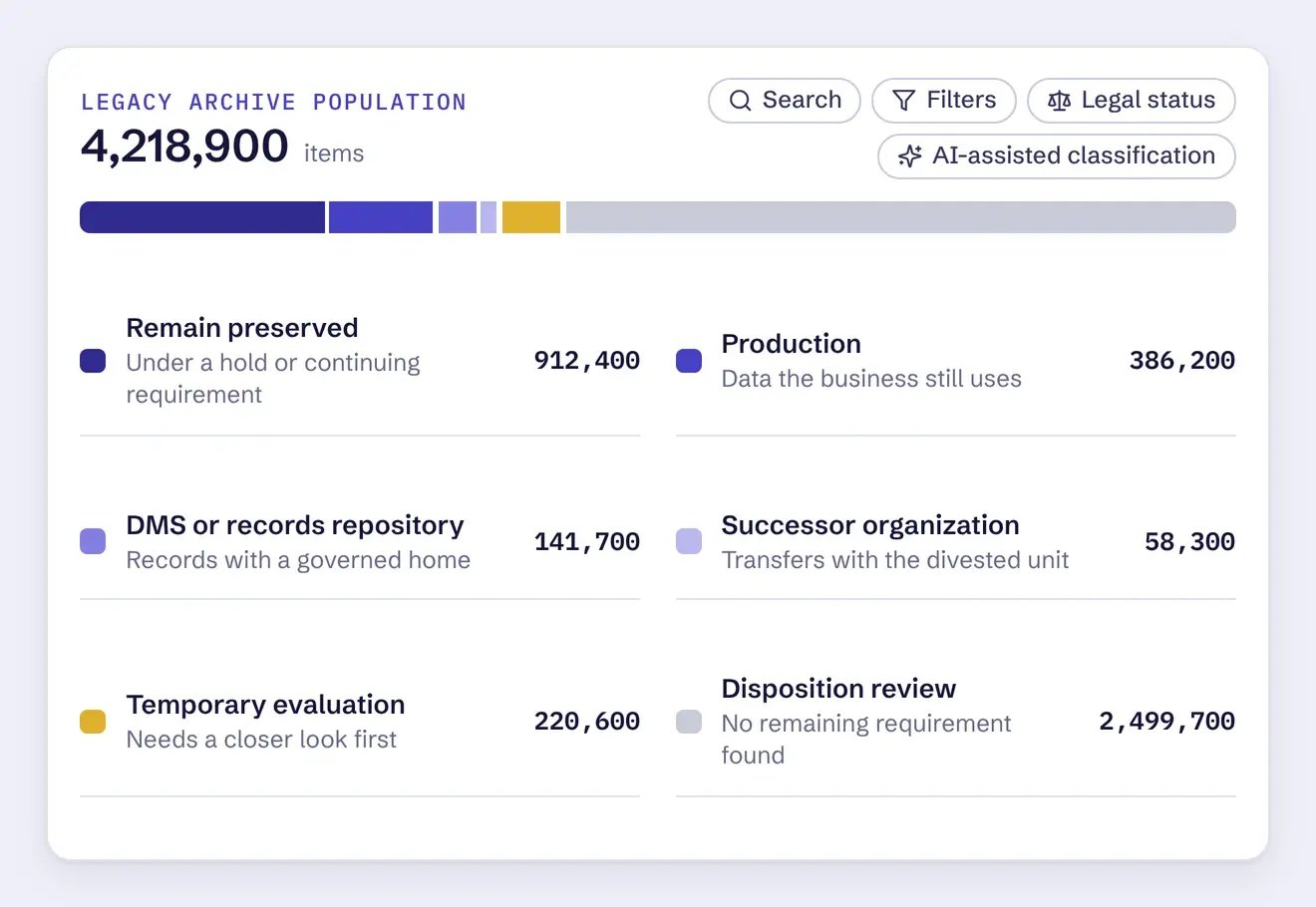
No. Expireon holds each population under governance while the requirement lasts and gives every population a defined future state: remain preserved, move to a governed repository, move to production, move to legal review, or proceed to disposition. 

What happens to data in Expireon when the obligation ends?

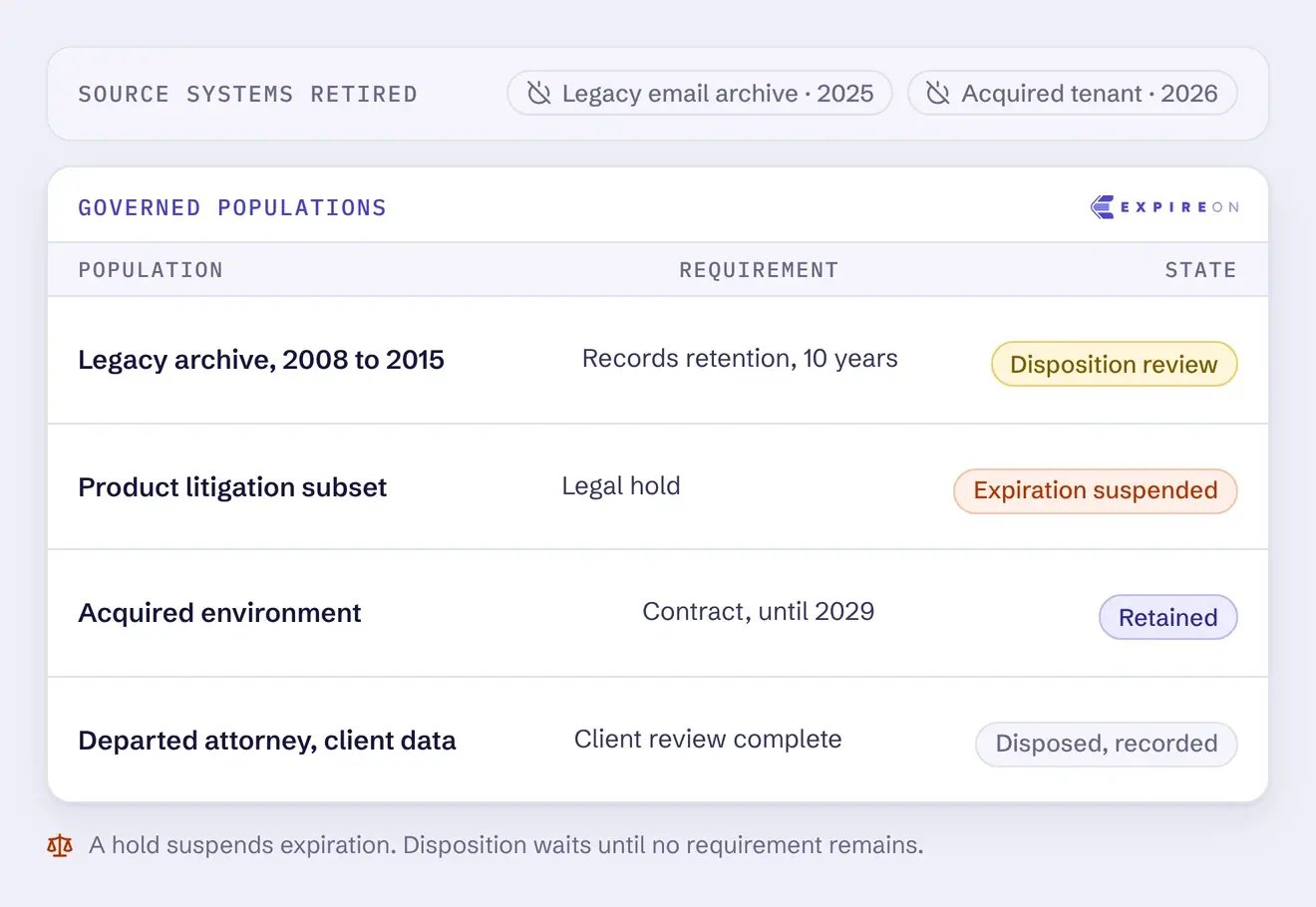
Retention categories and expiration make data eligible for disposition. Disposition is suspended while a legal hold or another continuing requirement applies, and what was disposed of is recorded. 

Can data be exported out of Expireon?

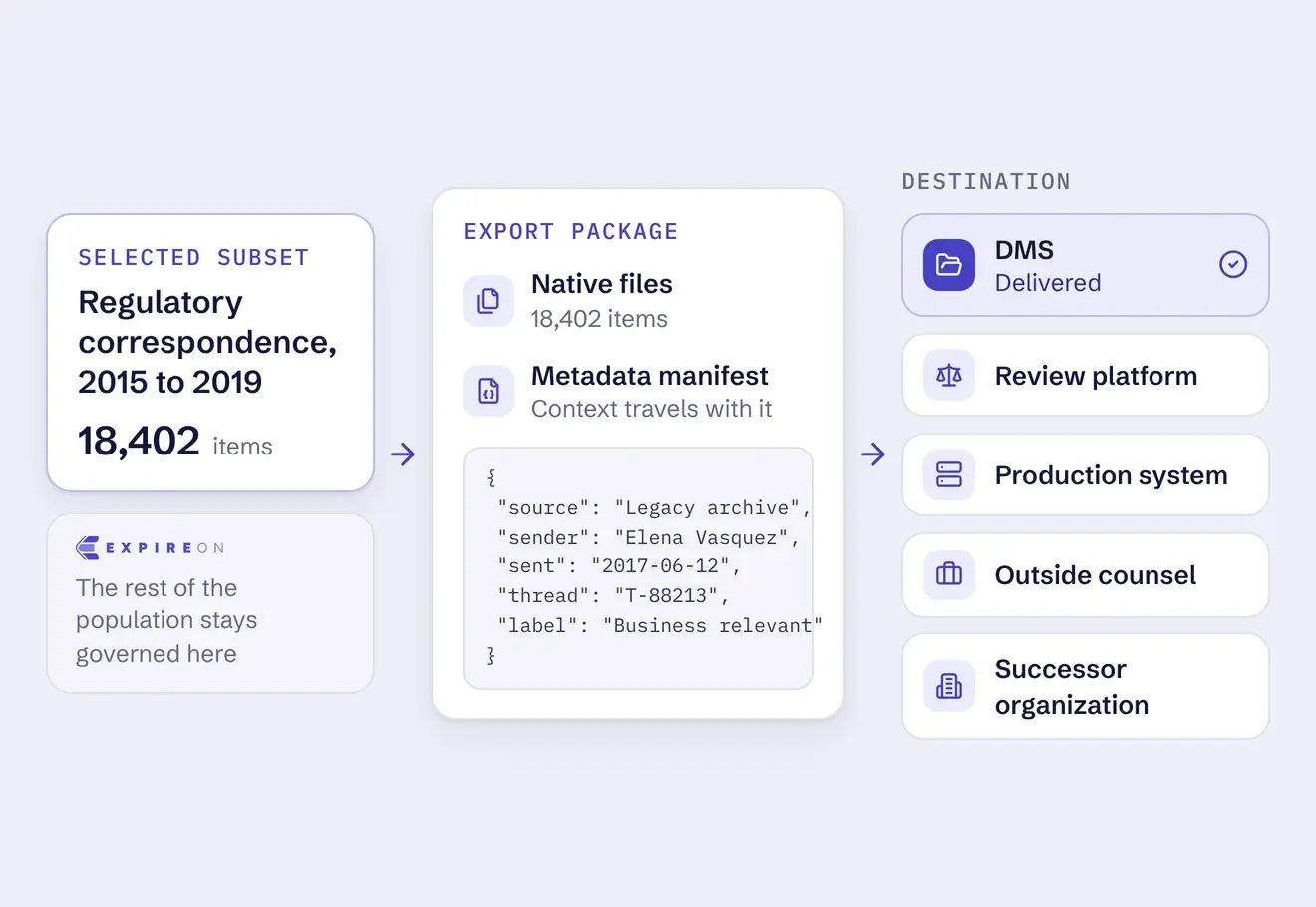
Yes. Selected subsets can be exported to a DMS, review platform, production system, counsel, or another approved destination, in supported formats, with no egress charge on Expireon storage. 

How is Expireon licensed?

Expireon is licensed and delivered as one platform under consumption-based pricing. The capability areas are not separately purchasable products, editions, or modules. 

Does Expireon manage legal holds?

Expireon protects populations that are under hold: scheduled expiration is suspended and disposition does not proceed while the hold is in effect. The hold process itself runs in CaseFusion, which is the system of record for the obligation. 

How is Expireon different from CaseFusion?

CaseFusion manages eDiscovery workflows. Expireon manages continuity for data that must outlive change. 

Give legally significant data a platform of its own

If data is keeping a legacy system running, delaying a migration or a transaction, or sitting in an abandoned account, we will show you what preserving it independently looks like, how to keep it usable, and how to retire it when the requirement ends.