Legacy email archives hold years of corporate communication, often stretching back decades. While these records can be valuable during legal discovery, they also introduce serious legal risk. Outdated messages, irrelevant communications, and massive volumes of redundant data can complicate investigations and increase the cost of eDiscovery.
Modern organizations are beginning to address this problem with artificial intelligence (AI). Instead of keeping every email forever, AI-driven systems can analyze historical data, classify it intelligently, and remove unnecessary noise. This approach allows companies to reduce legal risk while still preserving the information that truly matters.
Key Takeaways
- AI can help reduce legal risk in legacy email archives by identifying and removing low-value communications
- Focusing on the left side of the EDRM improves discovery readiness before legal review begins
- Noise reduction removes newsletters, automated messages, and irrelevant communications from archives
- Risk-based retention strategies prioritize important records while allowing unnecessary data to expire
- Machine learning classification provides a smarter alternative to brute-force data retention
- Open standards improve data sovereignty and enable easier integration with legal review tools
- AI-driven archives reduce discovery costs and improve the speed of legal investigations
What Is the Challenge of Legacy Email Archives?
The challenge of legacy email archives is that many organizations moved to cloud collaboration platforms such as Microsoft 365, but their historical email data often remains in older archive systems. These archives frequently contain journal data collected from older messaging systems. The structure of this data is very different from modern cloud retention models.
A single journal entry in a legacy system may represent one email sent to many recipients. When organizations attempt to migrate this data into modern platforms, the information must often be recreated as multiple copies across different mailboxes. This process increases the total volume of stored data dramatically and complicates compliance management.
For example, this often leads to several operational problems:
- The total amount of stored data can multiply several times during migration (mailbox explosion)
- Legal searches must run across far more mailboxes and records
- Compliance teams spend more time reviewing redundant or duplicated messages
Large datasets also make legal discovery slower and more expensive. When legal teams search massive archives filled with redundant or irrelevant content, they spend more time reviewing results and identifying what actually matters to a case.
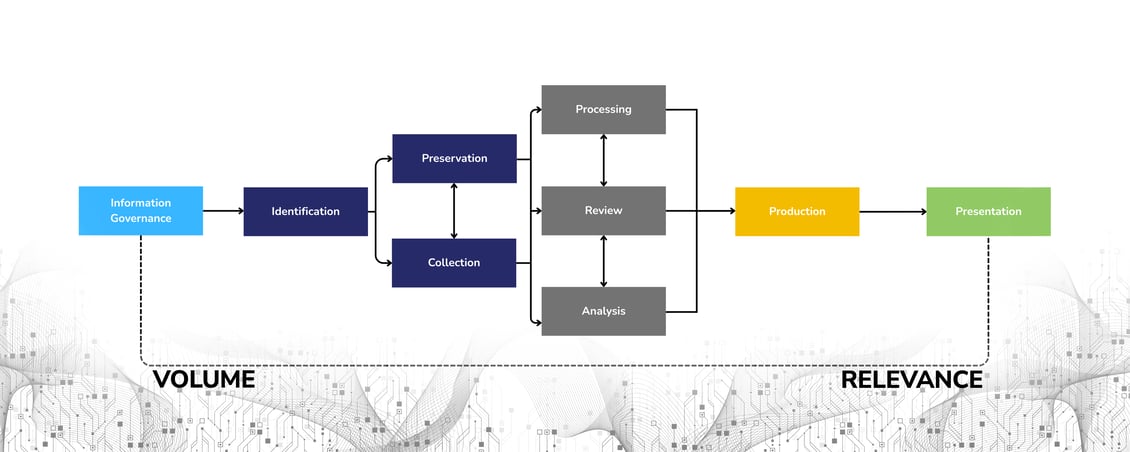
What Is the Left Side of the EDRM?
The left side of the Electronic Discovery Reference Model (EDRM) refers to the early stages of legal discovery, from identifying relevant data to preparing it for review. One of the most important phases occurs at the beginning of this lifecycle, often called the "left side" of the EDRM.
This phase includes identifying, collecting, and preparing information before it enters formal legal review. When organizations manage this stage effectively, they reduce the amount of unnecessary data that reaches attorneys and investigators.
This early preparation helps organizations:
- Reduce the volume of data that must be reviewed during eDiscovery
- Identify relevant communications faster during investigations
- Lower legal costs by limiting unnecessary document review
AI-powered archiving systems focus heavily on this stage. By organizing and filtering legacy communications before review begins, these systems make it easier to locate relevant information quickly. This improves legal response times and reduces the operational burden on compliance teams.
If you want to learn more about how this framework works in practice, we have a blog post that explains the different stages of the EDRM.
What Are Risk-Based Retention Strategies?
Risk-based retention strategies are approaches to email retention that analyze the importance and legal risk of each message rather than applying a single rule to all communications. For example, an organization might keep all emails for seven years regardless of their content. While this approach ensures compliance with certain regulations, it can also create unnecessary legal exposure.
AI introduces the possibility of risk-based retention. Instead of treating all emails equally, systems analyze the context and importance of each message. High-risk or legally significant communications can be preserved for longer periods, while low-value messages can expire sooner.
This strategy provides several practical benefits:
- Organizations retain high-risk or business-critical communications for the appropriate length of time
- Low-value operational emails can expire earlier, reducing archive size
- Legal teams have less irrelevant data to review during investigations
This strategy allows organizations to focus on preserving truly important records while safely removing information that provides little compliance value. As a result, the archive becomes smaller, more manageable, and easier to search during legal discovery.
How Does Machine Learning Classification Compare to Brute-Force Retention?
Machine learning classification is a modern approach to email archiving that analyzes message content and metadata, while brute-force retention simply stores every message without evaluating its relevance. Over time, this approach leads to massive archives filled with redundant and outdated information.
Machine learning classification offers a smarter alternative. AI systems analyze message content, metadata, and communication patterns to determine the significance of each record. For example, communications from senior executives may carry greater legal or business importance than routine operational messages. AI models can recognize these patterns and classify messages accordingly.
This intelligent classification helps organizations prioritize valuable records while minimizing the storage and review burden associated with irrelevant content.
How Do Open Standards Protect Data Sovereignty in Email Archives?
Open standards protect data sovereignty in email archives by ensuring organizations can access, export, and manage their archived communications without being locked into proprietary systems. Many legacy platforms rely on closed formats and limited APIs, making it difficult for organizations to access or migrate their own data.
Modern archive platforms are increasingly built on open standards and cloud-native frameworks. These technologies allow organizations to maintain full control over their information while ensuring flexibility for future migrations.
Open architectures also improve interoperability with other legal and compliance tools. Data can be exported more quickly and integrated into external review platforms, accelerating the overall discovery process.
Additional advantages of open standards include:
- Easier migration of archived data between platforms without proprietary restrictions
- Better compatibility with modern analytics, AI, and eDiscovery tools
Maintaining control over archived data is essential for organizations that must respond quickly to regulatory requests, investigations, or litigation.
How Do AI-Driven Archives Improve Legal Readiness?
AI-driven archives improve legal readiness by organizing, classifying, and filtering legacy communications before a legal investigation or eDiscovery request begins.
Instead of overwhelming legal teams with massive datasets, these systems prepare information for review before a case even begins. This preparation significantly reduces the time required to locate relevant communications and respond to legal requests.
By focusing on the early stages of the discovery lifecycle, organizations improve their ability to respond quickly and confidently when legal matters arise.
How Do Expireon and AI Studio Reduce Legal Risk in Legacy Email Archives?
Expireon and AI Studio reduce legal risk in legacy email archives by helping organizations to manage historical communication data and remove unnecessary information before legal review begins. Instead of forcing historic journal data into systems that were designed for active collaboration, we focus Expireon on the early stages of the discovery lifecycle, often called the left side of the Electronic Discovery Reference Model (EDRM).
With Expireon, we help organizations collect, preserve, and prepare legacy email data so it is ready for review without overwhelming legal teams with unnecessary information. Because Expireon was designed specifically for legacy archive workloads, it helps organizations:
- Collect and preserve historical email data in a format that is ready for legal review
- Manage large volumes of legacy communications without recreating thousands of mailboxes
- Avoid dramatic increases in storage volumes during legacy archive migrations
A major advantage comes from Expireon AI Studio, where we apply machine learning and AI-driven analysis to archived communications. AI Studio analyzes email content and communication patterns to identify low-value or irrelevant data, such as newsletters, automated notifications, and mass mailings.
By automatically identifying this type of noise, we help organizations remove or expire unnecessary content before it reaches the legal review stage. This can significantly reduce the amount of information that attorneys must analyze during an investigation or eDiscovery case.
AI Studio also supports risk-based retention strategies by helping organizations understand which communications are meaningful business records and which are not. In many environments, a large percentage of stored emails has little legal or regulatory value. By removing this noise, we help reduce storage costs, accelerate discovery workflows, and lower overall legal risk.
Through this combination of intelligent classification, noise reduction, and legacy-focused architecture, we help organizations retain important records while simplifying legal discovery and improving compliance readiness.
Conclusion
Legacy email archives remain a critical part of corporate data management, but they can also introduce significant legal and operational challenges. Massive datasets filled with outdated or irrelevant communications slow down investigations and increase the cost of compliance.
Artificial intelligence can provide a powerful solution to this problem. By classifying messages intelligently, removing unnecessary noise, and applying risk-based retention strategies, organizations can dramatically reduce the complexity of their archives.
When combined with open standards and modern cloud infrastructure, AI-driven archive platforms allow companies to maintain control over their historical data while improving legal readiness. The result is a smarter approach to managing legacy communications and reducing legal risk.
Frequently Asked Questions
How much unnecessary data typically exists in legacy email archives?
In many organizations, a large portion of archived email is not meaningful business communication. Messages such as newsletters, system notifications, and automated alerts can make up a significant percentage of stored data. Identifying and removing this noise with AI can dramatically reduce archive size and review workload.
Why is legacy journal data difficult to manage in modern cloud platforms?
Legacy journaling systems often store a single copy of an email along with metadata about all recipients. When this data is migrated into modern cloud platforms, it may need to be recreated as multiple copies across different mailboxes. This can dramatically increase storage volumes and make legal searches more complex.
How can organizations prepare legacy data before a legal investigation begins?
Organizations can prepare legacy data by classifying communications, removing irrelevant messages, and applying intelligent retention policies before any legal request occurs. Preparing data earlier in the discovery lifecycle helps reduce the amount of information attorneys must review when investigations begin.
How does AI help reduce the cost of eDiscovery?
AI helps reduce eDiscovery costs by identifying low-value messages and organizing archived communications before legal review begins. By reducing the amount of irrelevant data in search results, legal teams can focus on meaningful records and spend less time reviewing unnecessary information.
What should organizations consider when choosing a platform for legacy archive management?
Organizations should look for platforms that support open standards, scalable storage, and intelligent classification of archived communications. These capabilities ensure that historical data remains accessible, easier to search, and ready for legal discovery when needed.
-3.png?width=250&height=33&name=Untitled%20design%20(18)-3.png "Cloudficident Logo")
-3.png?width=527&height=69&name=Untitled%20design%20(18)-3.png "Untitled design (18)-3")
.png?width=200&height=26&name=Untitled%20design%20(18).png "Cloudficient")
.png?width=600&height=79&name=Untitled%20design%20(18).png "cloudficient logo")